J. Douglas Bremner
See book keywords and concepts |
 A, B12 AND CS OF THE INDUSTRY
Largely due to the legislative efforts of Senator Orrin Hatch (R-Utah), who has been part owner of a vitamin company and an important advocate for the vitamin and supplement industry, one fifth of which is located in his home state of Utah, the vitamin and supplement industry is not regulated. Congressional passage of the Dietary Supplement Health and Education Act (DSHEA), which was sponsored by Senator Hatch in 1994, removed regulatory authority that the FDA previously had over vitamins and supplements by providing manufacturers with a very large loophole. A, B12 AND CS OF THE INDUSTRY
Largely due to the legislative efforts of Senator Orrin Hatch (R-Utah), who has been part owner of a vitamin company and an important advocate for the vitamin and supplement industry, one fifth of which is located in his home state of Utah, the vitamin and supplement industry is not regulated. Congressional passage of the Dietary Supplement Health and Education Act (DSHEA), which was sponsored by Senator Hatch in 1994, removed regulatory authority that the FDA previously had over vitamins and supplements by providing manufacturers with a very large loophole. |
| Lobbyists for the vitamin and supplement industry have blocked efforts by the Department of Health and Human Services (DHHS), the federal agency responsible for health, to get involved.
The USDA's Recommended Daily Allowance (RDA) of vitamins and minerals has been great for the vitamin and supplement industry as well as for cereal makers, who supercharge their sales by adding vitamins and minerals to breakfast foods and then convincing customers they need to eat these fortified products to get their minimal daily requirements of vitamins and minerals. |
Craig Pepin-Donat
See book keywords and concepts |
 Like anything that catches on with the public and has the potential for huge profits, the supplement industry became big business. Hundreds of millions of consumers are buying pills, powders, tonics and other formulas to improve their health. At least that is what they are led to believe. False promises and unsubstantiated claims have propelled this industry into a $23 billion money-making juggernaut with thousands of manufacturers each promoting the next formula designed to achieve one of the four big, fat health and fitness lies:
1. Supplements will make you look better
2. Like anything that catches on with the public and has the potential for huge profits, the supplement industry became big business. Hundreds of millions of consumers are buying pills, powders, tonics and other formulas to improve their health. At least that is what they are led to believe. False promises and unsubstantiated claims have propelled this industry into a $23 billion money-making juggernaut with thousands of manufacturers each promoting the next formula designed to achieve one of the four big, fat health and fitness lies:
1. Supplements will make you look better
2. |
Mike Adams, the Health Ranger
See article keywords and concepts |
 Codex, the supplement industry and why people need to get involved in the fight for health freedom. Give us a little background, please, John.
John: I am the president of International Advocates for Health Freedom, located in Point Roberts, Washington. My website is www.NoCodexGenocide.com. I had a previous website, which is now archived, at www.IAHF.com. I have been a consultant to the dietary supplement industry on legislative issues since 1989, and I was the first to call the Codex threat to international health freedom to public attention in 1996 in an article in Life Extension Magazine. Codex, the supplement industry and why people need to get involved in the fight for health freedom. Give us a little background, please, John.
John: I am the president of International Advocates for Health Freedom, located in Point Roberts, Washington. My website is www.NoCodexGenocide.com. I had a previous website, which is now archived, at www.IAHF.com. I have been a consultant to the dietary supplement industry on legislative issues since 1989, and I was the first to call the Codex threat to international health freedom to public attention in 1996 in an article in Life Extension Magazine. |
Mike Adams, the Health Ranger
See article keywords and concepts |
 FDA tyranny, based on this type of arbitrary and unrestrained exercise of power, is used to promote and protect the pharmaceutical industry while at the same time undermining the dietary supplement industry.
Both the House and Senate think it is completely fine that the drug industry pay the FDA fees so that the FDA can approve new drugs faster. Indeed, the FDA and Big Pharma met 112 times to work out their partnership before the FDA let Congress know what it wanted to see in HR.2900 and S.1082. This is like paying the mob for protection. FDA tyranny, based on this type of arbitrary and unrestrained exercise of power, is used to promote and protect the pharmaceutical industry while at the same time undermining the dietary supplement industry.
Both the House and Senate think it is completely fine that the drug industry pay the FDA fees so that the FDA can approve new drugs faster. Indeed, the FDA and Big Pharma met 112 times to work out their partnership before the FDA let Congress know what it wanted to see in HR.2900 and S.1082. This is like paying the mob for protection. |
Stephen T. Sinatra, M.D.
See book keywords and concepts |
 The FDA watchdogs our pharmaceuticals, but not the supplement industry. While FDA involvement would spuriously skyrocket the cost of many vitamins and supplements and place them outside the affordability range for many people, it is not easy to know which products are worthy of your financial investments at present. This darkens the cloak of suspicion for many physicians. For now, I can only advise you on the products I've tested and found to be of high quality, and hope for some standards to be developed in the future. The FDA watchdogs our pharmaceuticals, but not the supplement industry. While FDA involvement would spuriously skyrocket the cost of many vitamins and supplements and place them outside the affordability range for many people, it is not easy to know which products are worthy of your financial investments at present. This darkens the cloak of suspicion for many physicians. For now, I can only advise you on the products I've tested and found to be of high quality, and hope for some standards to be developed in the future. |
Craig Pepin-Donat
See book keywords and concepts |
| Neal Spruce comments that, "In the supplement industry we call thermogenic compounds 'results crutches' for people who are unable to eat properly and exercise regularly. Usage of these compounds make you feel 'wired' as you might with a low dosage of amphetamines. The benefits of increased metabolism will not exceed between five to ten percent, but many people are willing to take the health risks for what they think will be fast and easy results."
Appetite suppressants claim to reduce hunger and cravings. |
| In a perfect world we would have a non-governmental advisory board with no conflicts of interest to regulate, monitor and control the supplement industry. This would include industry funding for clinical trials on natural compounds and mandatory testing on product ingredients and whole products. It would implement a proactive approval process on all new products brought to market and standardized marketing guidelines to shut the door on fraudulent or implied claims made through bogus advertising, labeling and packaging. |
| A revolution in the supplement industry occurred in 1940 when the "once-a-day vitamin supplement" was introduced.2 The simplicity and marketing of this product was genius. It held that there were these essential organic substances naturally present in our bodies that in some cases, because of dietary deficiencies or health issues, needed to be supplemented. All you had to do was take a little pill each day to ensure that your body had all the "Recommended Daily Allowances" needed for good health. It was hard to ignore something that sounded so good for you. |
| According to Neal Spruce, "The supplement industry will never have the financing to do clinical trials that would give the consumer the absolute proof that supplements work. The benefits of supplements are typically based on empirical evidence based on observation — experience that more or less survives the test of time." Another major reason the required funds will never be put behind clinical studies for supplements is because a natural substance cannot be patented with the same legal protections as a drug. |
Bill Sardi
See book keywords and concepts |
 The calls for greater regulation of the dietary supplement industry during the PC-SPES ordeal were deafening. In one report on PC-SPES, The Wall Street Journal said that "makers of supplements don't have to adhere to as rigorous manufacturing requirements or submit results of clinical trials to the FDA." [WSJ May 26, 2002] However, current laws require dietary supplements to be pure and contain only the ingredients listed on the label, which PC-SPES failed to do. No new regulations were needed to force BotanicLab to recall PC-SPES. The calls for greater regulation of the dietary supplement industry during the PC-SPES ordeal were deafening. In one report on PC-SPES, The Wall Street Journal said that "makers of supplements don't have to adhere to as rigorous manufacturing requirements or submit results of clinical trials to the FDA." [WSJ May 26, 2002] However, current laws require dietary supplements to be pure and contain only the ingredients listed on the label, which PC-SPES failed to do. No new regulations were needed to force BotanicLab to recall PC-SPES. |
| The dietary supplement industry responded defensively, saying the beta carotene used was synthetic rather than from a natural source, that the dosage was too low, and that the wrong vitamin was employed. But the study itself was misleading, if not an outright deception. It is 20 times more effective to stop smoking than to avoid beta carotene supplements. Yet this study is cited again and again, for over a decade, as evidence that dietary supplements can pose health risks. |
J. Douglas Bremner
See book keywords and concepts |
| The fact that vitamin C continues to be touted for the prevention of colds can only be attributed to the incredible marketing ability of the vitamin and supplement industry and the ability of the American public to suspend disbelief.
The modern-day obsession with vitamins, supplements, and nutrition can be traced back to a book from the 1960s called Let's Get Well by Adelle Davis, who advocated high doses of vitamins for the promotion of health and the prevention of heart disease and cancer. |
Michael T. Murray and Michael R. Lyon
See book keywords and concepts |
 Thermogenic Formulas
Herbal formulas containing mixtures of caffeine and ephedrine were once the most popular weight-loss products in the nutritional supplement industry. There was no question that these products worked to promote diet-induced thermogenesis and weight loss, but they were abused by some and side effects were common. When ephedrine was linked to several deaths due mainly to abuse, it ultimately led to the banning of ephedrine-containing supplements by the FDA. Thermogenic Formulas
Herbal formulas containing mixtures of caffeine and ephedrine were once the most popular weight-loss products in the nutritional supplement industry. There was no question that these products worked to promote diet-induced thermogenesis and weight loss, but they were abused by some and side effects were common. When ephedrine was linked to several deaths due mainly to abuse, it ultimately led to the banning of ephedrine-containing supplements by the FDA. |
Stephen T. Sinatra, M.D.
See book keywords and concepts |
| That is not to say that the nutritional supplement industry is blameless. Too many dietary supplements—claiming to treat everything from heart health to weight loss to male sexual enhancement—have hit the market with major media campaigns, plenty of claims, and a host of promises, with little, if any, science behind them. |
Craig Pepin-Donat
See book keywords and concepts |
| Don't believe the overhyped claims of those in the supplement industry who take advantage of the vulnerabilities and the hopes of others. Many are selling snake oil. One rule of thumb to always remember: If it sounds too good to be true, it is! This is a good thing to remember in most areas of life.
While there are many charlatans out there who will scam you for all you're worth, there are also those who are authentic and genuine in their desire to help others achieve a life of health and fitness. We just have to weed through the misinformation to find them. |
Stephen T. Sinatra, M.D.
See book keywords and concepts |
| There can be no doubt that this "hype versus science" attitude in the nutritional supplement industry has placed major roadblocks in the path of acceptance of those natural therapies that do have solid science and demonstrable clinical benefit, and has encouraged many more-than-skeptical attitudes among healthcare providers.
Another dilemma is the not-all-are-created-equal issue regarding nutritional supplements. While many products are pure, many others fail to live up to the ingredients and dosages listed on their labels. |
J. Douglas Bremner
See book keywords and concepts |
| The USDA's Recommended Daily Allowance (RDA) of vitamins and minerals has been great for the vitamin and supplement industry as well as for cereal makers, who supercharge their sales by adding vitamins and minerals to breakfast foods and then convincing customers they need to eat these fortified products to get their minimal daily requirements of vitamins and minerals. This is despite the fact that there is no way to get enough of the recommended vitamins and minerals from normal food without overeating. Government recommendations are actually four times higher than what a person really needs. |
David Steinman
See book keywords and concepts |
 As a publisher entrusted with the public good, I expect our reporting to go beyond superficial hype (and there's a lot of that kind of marketing fertilizer spread throughout the dietary supplement industry by irresponsible manufacturers and publishers). That is why when our writers and medical experts make a product recommendation, it had better be for an outstanding degree of proven health benefit and be safe. As a publisher entrusted with the public good, I expect our reporting to go beyond superficial hype (and there's a lot of that kind of marketing fertilizer spread throughout the dietary supplement industry by irresponsible manufacturers and publishers). That is why when our writers and medical experts make a product recommendation, it had better be for an outstanding degree of proven health benefit and be safe. |
| For the dietary supplement industry, however, that amount represents an enormous investment.
Because the funds are relatively small by institutional and pharmaceutical standards, Newmark and Schulick have chosen to carefully allocate their dollars to highly focused outcome-oriented studies. Much of the research has focused on prostate (and, to a lesser extent, breast) cancer. You certainly can't fault their choice of institutions where research is being funded: Columbia-Presbyterian Medical Center and M. D. Anderson Cancer Center are tops in the nation. |
Jeffrey M. Smith
See book keywords and concepts |
 In the area of genetically engineered food regulation, the 'competent' agencies rarely if ever (know how to) conduct independent research to verify or supplement industry findings."64
So-called "independent" scientific bodies are often heavily influenced by industry
William Freese "The expert bodies are often comprised mainly of plant science specialists who themselves receive research funding from biotechnology companies, or whose institutions receive such funding.... In the area of genetically engineered food regulation, the 'competent' agencies rarely if ever (know how to) conduct independent research to verify or supplement industry findings."64
So-called "independent" scientific bodies are often heavily influenced by industry
William Freese "The expert bodies are often comprised mainly of plant science specialists who themselves receive research funding from biotechnology companies, or whose institutions receive such funding.... |
Mike Adams, the Health Ranger
See article keywords and concepts |
 This is the nutritional supplement industry that a lot of people see. I know that these particular supplements are from the same manufacturers that you find making low-cost vitamins sold at grocery stores and pharmacies. It's no wonder that some people have such a dim view of the nutritional supplements industry. They take these products and they feel worse.
Well, no wonder; you've just consumed toxic ingredients – not what was in the label, but what was listed in the fine print of the ingredients section. No wonder you feel worse; you're just eating hydrogenated oils. This is the nutritional supplement industry that a lot of people see. I know that these particular supplements are from the same manufacturers that you find making low-cost vitamins sold at grocery stores and pharmacies. It's no wonder that some people have such a dim view of the nutritional supplements industry. They take these products and they feel worse.
Well, no wonder; you've just consumed toxic ingredients – not what was in the label, but what was listed in the fine print of the ingredients section. No wonder you feel worse; you're just eating hydrogenated oils. |
T. Colin Campbell, Ph.D. and Thomas M. Campbell II
See book keywords and concepts |
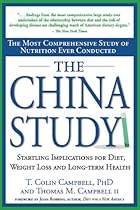 As a result, a multibillion-dollar supplement industry is now part of our nutritional landscape, and the majority of consumers have been duped into believing that they are buying health. This was the late Dr. Atkins's formula. He advocated a high-protein, high-fat diet—sacrificing long-term health for short-term gain—and then advocated taking his supplements to address what he called, in his own words, the "common dieters' problems" including constipation, sugar cravings, hunger, fluid retention, fatigue, nervousness and insomnia. As a result, a multibillion-dollar supplement industry is now part of our nutritional landscape, and the majority of consumers have been duped into believing that they are buying health. This was the late Dr. Atkins's formula. He advocated a high-protein, high-fat diet—sacrificing long-term health for short-term gain—and then advocated taking his supplements to address what he called, in his own words, the "common dieters' problems" including constipation, sugar cravings, hunger, fluid retention, fatigue, nervousness and insomnia. |
Mike Adams, the Health Ranger
See article keywords and concepts |
| I have been a consultant to the dietary supplement industry on legislative issues since 1989, and I was the first to call the Codex threat to international health freedom to public attention in 1996 in an article in Life Extension Magazine.
When I wrote that article, I was an employee of the Life Extension Foundation spearheading the effort to keep Saul Kent and Bill Faloon out of federal prison in the aftermath of an armed FDA raid in the late '80s. They fought in the courts for many years. I also spearheaded an effort to build a rather unique museum called the FDA Holocaust Museum. |
| It would burden the supplement industry unfairly, especially given that there is hard evidence that dietary supplements are far safer than food in common form. I do not see toll-free numbers being forced onto jars of peanut butter, despite the fact that every year a certain number of people die because they have allergic reactions to peanuts that cause them to go into anaphylactic shock and drop dead. You do not hear the FDA making a big deal about that.
We do not live in a very safe world. |
Kevin Trudeau
See book keywords and concepts |
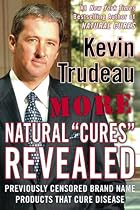 The book's discoveries and explanations of the scenarios are not simply about Ephedra, but rather expose the entire supplement industry, the legislation that governs it, and how lobbyists, special interests, the drug companies, and media are all working together to hide the truth about nutritional information from the public. I highly recommend this book. It goes into great detail and validates everything I've been saying in my book and in my newsletters. The book's discoveries and explanations of the scenarios are not simply about Ephedra, but rather expose the entire supplement industry, the legislation that governs it, and how lobbyists, special interests, the drug companies, and media are all working together to hide the truth about nutritional information from the public. I highly recommend this book. It goes into great detail and validates everything I've been saying in my book and in my newsletters. |
Mike Adams, the Health Ranger
See article keywords and concepts |
 REPPED: Here's a quick update on the state of the hoodia gordonii supplement industry. You probably already know that I don't sell hoodia products nor do I make any commissions on any such sales, so I've been looking into this as a consumer advocate, trying to sort out fact from fiction for those people interested in using natural appetite suppressants.
According to my research, the vast majority of the hoodia gordonii sold in the United States and around the world is still counterfeit. REPPED: Here's a quick update on the state of the hoodia gordonii supplement industry. You probably already know that I don't sell hoodia products nor do I make any commissions on any such sales, so I've been looking into this as a consumer advocate, trying to sort out fact from fiction for those people interested in using natural appetite suppressants.
According to my research, the vast majority of the hoodia gordonii sold in the United States and around the world is still counterfeit. |
Mike Adams, the Health Ranger
See article keywords and concepts |
 Other industries also suffer from fraud
By the way, for some context here, this is not a unique problem for the nutritional supplement industry. In fact, if you look at the medical industry, the vast majority of money changing hands is fraudulent. California is suing 37 pharmaceutical companies. New York is suing companies over Medicaid fraud, and there's so much fraud in Medicare that it packs on literally billions of dollars of waste that does nothing but pad the pockets of crooks. Other industries also suffer from fraud
By the way, for some context here, this is not a unique problem for the nutritional supplement industry. In fact, if you look at the medical industry, the vast majority of money changing hands is fraudulent. California is suing 37 pharmaceutical companies. New York is suing companies over Medicaid fraud, and there's so much fraud in Medicare that it packs on literally billions of dollars of waste that does nothing but pad the pockets of crooks. |
T. Colin Campbell, Ph.D. and Thomas M. Campbell II
See book keywords and concepts |
| As I have watched the interest in nutrient supplements explode over the past twenty to thirty years, it has become abundantly clear why such a huge nutrient supplement industry has emerged. Huge profits are an excellent incentive, and new government regulations have paved the way for an expanded market. Furthermore, consumers want to continue eating their customary foods, and popping a few supplements makes people feel better about ;he potentially adverse health effects caused by their diet. |









 Email this page to a friend